

- mer. 22 août 2012 00:54
#297331
BON! comme ça fait plusieurs collègue de travail qui me posent la question... et qui savent pas trop sur quel pieds danser avec ça... je vous sort l'article de loi du FMCSA sur la loi du CABOTAGE OU PLUS COMMUNEMENT APPELÉ INTERSTATE... prenez le temps de la lire au complet et de la comprendre..
en somme.. quand nous sommes a larédo, tx.. et que on vous demande de livrer au états unis... le load que vous rammasser au terminal de Laredo est considéré comme un load canadien qui s'en va en sol américain.. a condition qu'il proviennent d'un sol étranger et qu'un américain avant vous ait fait le pick up... et ait dropper dans la cours de Laredo. TX ensuite un autre article de la loi dit que.. vous pouvez livrer en sol américain un load américain.. si le load vous amene a un prochain pick up qui vous amene en sol canadian... et que cela fait partie d'une série de mouvement logistique qui sont destiné a vous ramener a la maison...
alors en gros c'Est ça et voici l'Article de loi.. bonne lecture!
U.S. on Canadian-based vehicles is allowed provided either prior or subsequent transport
is performed by U.S-based vehicles. Using the example above, a Canadian carrier would
be allowed to transport merchandise with an origin of Buffalo, NY and a destination of
Detroit, MI provided some portion of the trip was performed by a U.S.-based carrier
(Buffalo, NY to Windsor, ON on a Canadian-based vehicle; Windsor, ON to Detroit, MI
on a U.S.-based vehicle).
4. Use of Canadian-based Vehicles for Domestic Transportation. Generally, the use of
Canadian-based vehicles for domestic movement of merchandise is prohibited. There is
one exception. A domestic movement incidental to the immediate prior or subsequent
engagement of a vehicle in international transportation is allowed. Incidental is defined
as Ain the general direction of an export move or as part of the return movement to their
base country@. It includes a movement en route to the pick-up of an export move. For
example, a Toronto, ON-based carrier transports merchandise originating in Toronto and
terminating in Miami, FL. The vehicle can then be used to pick up merchandise in Miami
for delivery to St Louis, MO (a domestic move) where an export move will be picked up
for delivery to Canada. The movement of merchandise from Miami to St Louis is
considered incidental to the immediate prior or subsequent engagement of such vehicle in
international transportation. The Canadian-based vehicle can also transport a domestic
move in the general direction of an export move and then immediately return empty to
Canada.
The purpose of this change in cabotage regulations was to allow more efficient and economical
utilization of vehicles both domestically and internationally.
INS Requirements:
1. Temporary Visitors for Business. Canadian truck drivers must meet the general entry
requirements as a visitor for business. The requirements include:
$ have a residence in a foreign country which he or she has no intention of
abandoning,
$ intend to depart the U.S. at the end of the authorized period of temporary
admission,
$ have adequate financial means to carry out the purpose of the visit to and
departure from the U.S., and
$ establish that he or she is not inadmissible to the U.S. under the provisions of
section 212(a) of the Immigration and Naturalization Act, which includes such
grounds of inadmissibility as health-related, criminal, subversive, public charge,
improper manner of arrival or improper documents, other immigration violations,
and several other categories of ineligibility.
2. Documentary Requirements. Each applicant for admission as a visitor for business is
required to satisfy the inspecting officer of his or her citizenship. An oral declaration may
be accepted or the inspecting officer may request supporting documentation. Such
documentation may include, but is not limited to, a passport, a birth certificate, or a
certificate of citizenship.
3. Key Principles Relating to Cabotage.
$ Drivers may be admitted to deliver or pick-up cargo traveling in the stream of
international commerce.
$ Drivers may not engage in point-to-point hauling within the U.S.
$ Drivers may not engage in any activity that qualifies as local labor for hire.
4. INS Regulations. Canadian-based drivers may transport goods or passengers to the
U.S. from Canada if all goods or passengers to be delivered were loaded in Canada.
Likewise, Canadian-based drivers may load and transport goods or passengers from the
U.S. to Canada provided no unloading occurs in the U.S. They may also load goods or
passengers at various locations in the U.S. only if all goods and passengers will be
unloaded in a foreign country.
Purely domestic service (point-to-point within the U.S.) is not permitted.
Solicitation, in competition with U.S. operators, is not permitted. This means that a
Canadian-based driver cannot solicit a return load for delivery to Canada while in the
U.S. Any return load must be pre-arranged.
5. Examples of Permissible Movements by Canadian-based Drivers.
$ A shipment from Canada to one or more locations within the U.S.
$ A return shipment from one or more U.S. pick-up locations for delivery to Canada
provided the pick-ups were pre-arranged.
$ Delivery of a shipment from Canada to the U.S., drive with the same empty trailer
to another U.S. location, live load that trailer for delivery to Canada.
$ Delivery of a shipment from Canada to the U.S., drive with the same empty trailer
to another U.S. location, drop the trailer, pick up a second loaded trailer for
delivery to Canada.
$ Delivery of a shipment from Canada to the U.S., pick up a different empty trailer
and drive to another U.S. location, live load that trailer for delivery to Canada.
$ Delivery of a loaded trailer from Canada to one U.S. location, drive the tractor
(with no trailer) to another U.S. location to pick up a loaded trailer for delivery to
Canada.
$ Canadian relay drivers may drive entirely domestic segments of an international
move. For example, a Canadian driver may drive a vehicle (transporting an
international shipment originating in New York City and destined for Montreal,
PQ) from New York City to Albany, NY where another Canadian driver takes
over and completes the trip by driving from Albany, NY to Montreal, PQ. The,
driver does not need to enter the U.S. with the vehicle, but must enter within a
reasonable period.
$ Drivers may perform activities that are Anecessary incidents@ of international
commerce, such as loading or unloading international cargo.
$ Drivers may be paid by a U.S. carrier/employer, provided the driver is engaged
solely in the international delivery of goods and cargo to or from the U.S. The
driver must qualify as a visitor for business.
6. Examples of Movements Not Permitted by Canadian-based Drivers.
$ Pick up a shipment at one U.S. location for delivery to another U.S. location
$ Reposition an empty trailer between two points in the U.S. when the driver did not
either enter with or depart with that trailer.
$ Pick up additional domestic shipments to fill up a partially filled trailer carrying
an international shipment.
$ Solicit shipments for delivery while in the U.S.
Conflicts Involving U.S. Customs and INS Regulations
U.S. Customs regulations allow for Canadian-based vehicles to transport domestic shipments
(point-to-point in the U.S.) when the shipment is incidental to the immediate prior or subsequent
engagement of the vehicle in an international movement. INS regulations do not allow a
Canadian-based driver to pick up a shipment at a U.S. location for delivery to another U.S.
location. It should be noted that the U.S. Customs regulations provide that the Canadian-based
driver must be in compliance with the applicable INS regulations to operate a vehicle in this type
of move. Because the INS regulation prohibits this type of move, in effect, the U.S. Customs
regulation is moot at the present time.
en espérant le tout plus clair pour vous mes chers collegues! c'est pas moi qui le dit.. c'est écrit ci dessus.. un load rammassé a laredo.. livrable en sol américain n'est pas un interstate.. car il est considerer comme un switch destiné a vous ramener vers la maison.. ce que l'on ne peut pas faire.. c'est de faire un pick up et de le livrer en sol usa... ça c'est de l'interstate. mais si vous avez une remorque chargé, que vous la rammasser au terminal de larédo.. qui est considerer comme un sol canadien... et que vous livrer a Dallas par exemble..c'est pas un interstate au sens de la loi... alors arretez d'avoir peur pour rien.
en somme.. quand nous sommes a larédo, tx.. et que on vous demande de livrer au états unis... le load que vous rammasser au terminal de Laredo est considéré comme un load canadien qui s'en va en sol américain.. a condition qu'il proviennent d'un sol étranger et qu'un américain avant vous ait fait le pick up... et ait dropper dans la cours de Laredo. TX ensuite un autre article de la loi dit que.. vous pouvez livrer en sol américain un load américain.. si le load vous amene a un prochain pick up qui vous amene en sol canadian... et que cela fait partie d'une série de mouvement logistique qui sont destiné a vous ramener a la maison...
alors en gros c'Est ça et voici l'Article de loi.. bonne lecture!
U.S. on Canadian-based vehicles is allowed provided either prior or subsequent transport
is performed by U.S-based vehicles. Using the example above, a Canadian carrier would
be allowed to transport merchandise with an origin of Buffalo, NY and a destination of
Detroit, MI provided some portion of the trip was performed by a U.S.-based carrier
(Buffalo, NY to Windsor, ON on a Canadian-based vehicle; Windsor, ON to Detroit, MI
on a U.S.-based vehicle).
4. Use of Canadian-based Vehicles for Domestic Transportation. Generally, the use of
Canadian-based vehicles for domestic movement of merchandise is prohibited. There is
one exception. A domestic movement incidental to the immediate prior or subsequent
engagement of a vehicle in international transportation is allowed. Incidental is defined
as Ain the general direction of an export move or as part of the return movement to their
base country@. It includes a movement en route to the pick-up of an export move. For
example, a Toronto, ON-based carrier transports merchandise originating in Toronto and
terminating in Miami, FL. The vehicle can then be used to pick up merchandise in Miami
for delivery to St Louis, MO (a domestic move) where an export move will be picked up
for delivery to Canada. The movement of merchandise from Miami to St Louis is
considered incidental to the immediate prior or subsequent engagement of such vehicle in
international transportation. The Canadian-based vehicle can also transport a domestic
move in the general direction of an export move and then immediately return empty to
Canada.
The purpose of this change in cabotage regulations was to allow more efficient and economical
utilization of vehicles both domestically and internationally.
INS Requirements:
1. Temporary Visitors for Business. Canadian truck drivers must meet the general entry
requirements as a visitor for business. The requirements include:
$ have a residence in a foreign country which he or she has no intention of
abandoning,
$ intend to depart the U.S. at the end of the authorized period of temporary
admission,
$ have adequate financial means to carry out the purpose of the visit to and
departure from the U.S., and
$ establish that he or she is not inadmissible to the U.S. under the provisions of
section 212(a) of the Immigration and Naturalization Act, which includes such
grounds of inadmissibility as health-related, criminal, subversive, public charge,
improper manner of arrival or improper documents, other immigration violations,
and several other categories of ineligibility.
2. Documentary Requirements. Each applicant for admission as a visitor for business is
required to satisfy the inspecting officer of his or her citizenship. An oral declaration may
be accepted or the inspecting officer may request supporting documentation. Such
documentation may include, but is not limited to, a passport, a birth certificate, or a
certificate of citizenship.
3. Key Principles Relating to Cabotage.
$ Drivers may be admitted to deliver or pick-up cargo traveling in the stream of
international commerce.
$ Drivers may not engage in point-to-point hauling within the U.S.
$ Drivers may not engage in any activity that qualifies as local labor for hire.
4. INS Regulations. Canadian-based drivers may transport goods or passengers to the
U.S. from Canada if all goods or passengers to be delivered were loaded in Canada.
Likewise, Canadian-based drivers may load and transport goods or passengers from the
U.S. to Canada provided no unloading occurs in the U.S. They may also load goods or
passengers at various locations in the U.S. only if all goods and passengers will be
unloaded in a foreign country.
Purely domestic service (point-to-point within the U.S.) is not permitted.
Solicitation, in competition with U.S. operators, is not permitted. This means that a
Canadian-based driver cannot solicit a return load for delivery to Canada while in the
U.S. Any return load must be pre-arranged.
5. Examples of Permissible Movements by Canadian-based Drivers.
$ A shipment from Canada to one or more locations within the U.S.
$ A return shipment from one or more U.S. pick-up locations for delivery to Canada
provided the pick-ups were pre-arranged.
$ Delivery of a shipment from Canada to the U.S., drive with the same empty trailer
to another U.S. location, live load that trailer for delivery to Canada.
$ Delivery of a shipment from Canada to the U.S., drive with the same empty trailer
to another U.S. location, drop the trailer, pick up a second loaded trailer for
delivery to Canada.
$ Delivery of a shipment from Canada to the U.S., pick up a different empty trailer
and drive to another U.S. location, live load that trailer for delivery to Canada.
$ Delivery of a loaded trailer from Canada to one U.S. location, drive the tractor
(with no trailer) to another U.S. location to pick up a loaded trailer for delivery to
Canada.
$ Canadian relay drivers may drive entirely domestic segments of an international
move. For example, a Canadian driver may drive a vehicle (transporting an
international shipment originating in New York City and destined for Montreal,
PQ) from New York City to Albany, NY where another Canadian driver takes
over and completes the trip by driving from Albany, NY to Montreal, PQ. The,
driver does not need to enter the U.S. with the vehicle, but must enter within a
reasonable period.
$ Drivers may perform activities that are Anecessary incidents@ of international
commerce, such as loading or unloading international cargo.
$ Drivers may be paid by a U.S. carrier/employer, provided the driver is engaged
solely in the international delivery of goods and cargo to or from the U.S. The
driver must qualify as a visitor for business.
6. Examples of Movements Not Permitted by Canadian-based Drivers.
$ Pick up a shipment at one U.S. location for delivery to another U.S. location
$ Reposition an empty trailer between two points in the U.S. when the driver did not
either enter with or depart with that trailer.
$ Pick up additional domestic shipments to fill up a partially filled trailer carrying
an international shipment.
$ Solicit shipments for delivery while in the U.S.
Conflicts Involving U.S. Customs and INS Regulations
U.S. Customs regulations allow for Canadian-based vehicles to transport domestic shipments
(point-to-point in the U.S.) when the shipment is incidental to the immediate prior or subsequent
engagement of the vehicle in an international movement. INS regulations do not allow a
Canadian-based driver to pick up a shipment at a U.S. location for delivery to another U.S.
location. It should be noted that the U.S. Customs regulations provide that the Canadian-based
driver must be in compliance with the applicable INS regulations to operate a vehicle in this type
of move. Because the INS regulation prohibits this type of move, in effect, the U.S. Customs
regulation is moot at the present time.
en espérant le tout plus clair pour vous mes chers collegues! c'est pas moi qui le dit.. c'est écrit ci dessus.. un load rammassé a laredo.. livrable en sol américain n'est pas un interstate.. car il est considerer comme un switch destiné a vous ramener vers la maison.. ce que l'on ne peut pas faire.. c'est de faire un pick up et de le livrer en sol usa... ça c'est de l'interstate. mais si vous avez une remorque chargé, que vous la rammasser au terminal de larédo.. qui est considerer comme un sol canadien... et que vous livrer a Dallas par exemble..c'est pas un interstate au sens de la loi... alors arretez d'avoir peur pour rien.
i make this truck looking good!! :) check moé passé dans mon Kenny t660 2014 toé!!! :)



 pis souvent.. je leur fait du citywork.. je prend les loads dans cours de laredo..que les peureux d'interstate veulent pas aller dropper chez le drop yard du client mexicain.. et je les drops.. PIS NON C'EST PAS UN INTERSTATE ÇA NON PLUS... je livre pas.. je drop la remorque.. le load sort pas de la en ma présence.. car je ne fait que continuer un mouvement qu'un autre a pas fini!.. parce que c'Est bien écrit sur les macro.. on passe par le terminal en premier pour faire inspecter par l'inspecteur... et on livre le trailer au drop yard mexicaine apres...


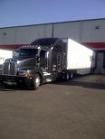


 J'etait un peu presser pour mon drop...sorry bud !! Next time!!! Garantie.
 :modo:
 - By Legovglas
 - By edwardhenry
 - By smithaaron
 - By honeycloe